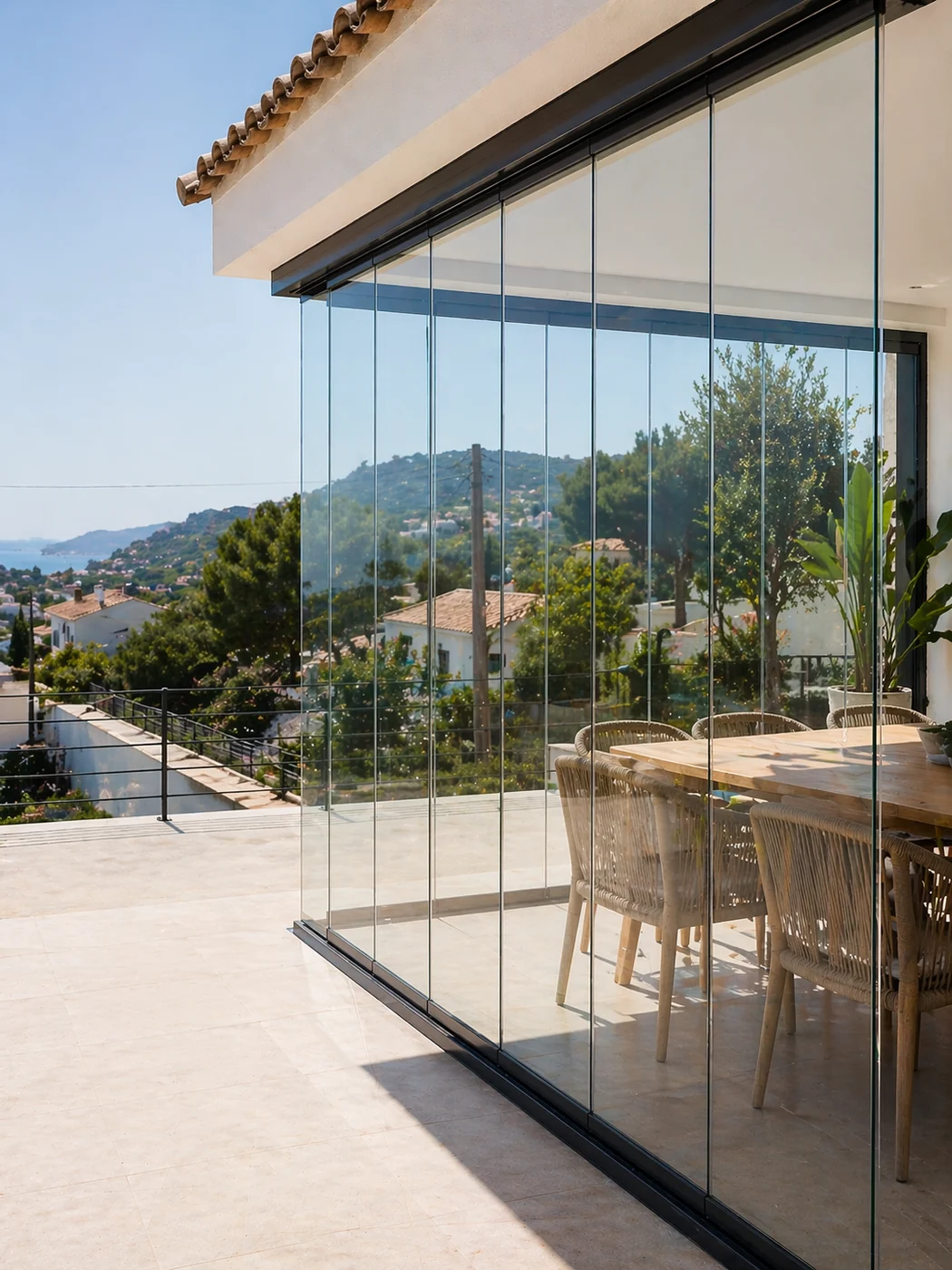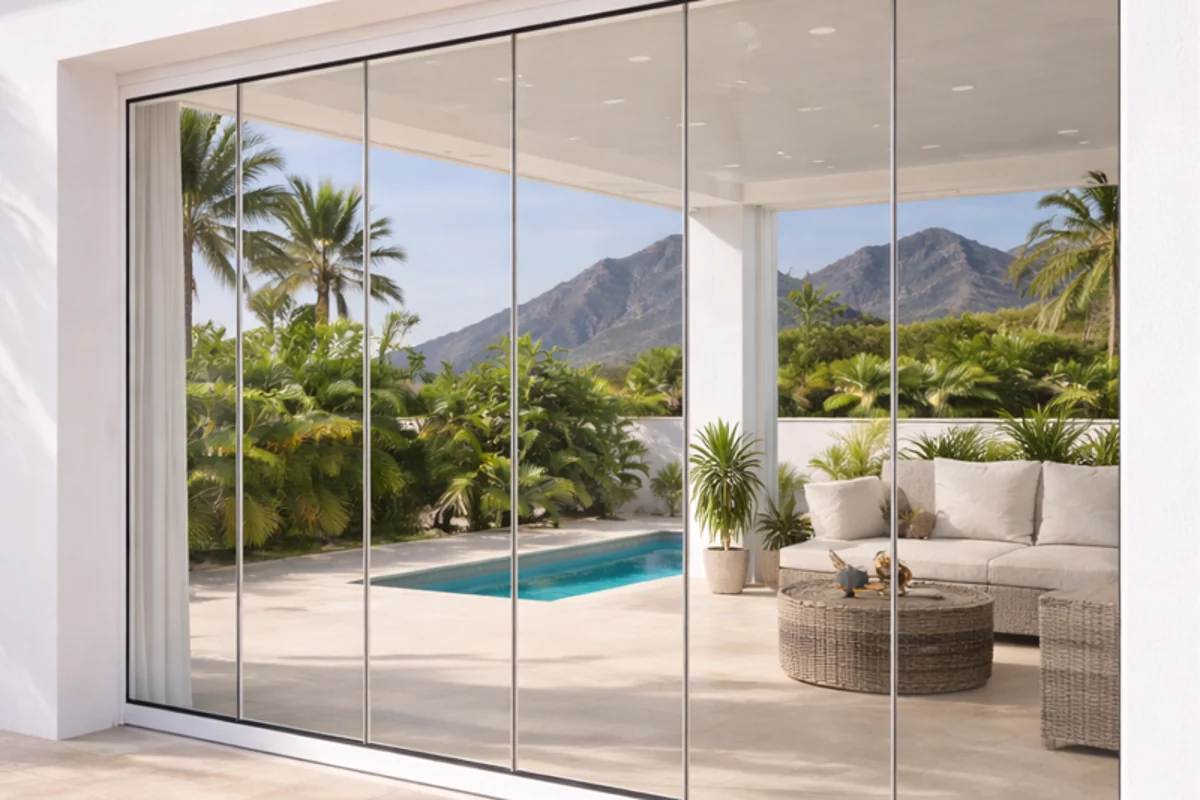
How a glass curtain opens
Each panel moves individually before turning and stacking at the chosen end of the opening. The stacking position has to remain clear of furniture, doors and the main route through the terrace.
Closed panels give a covered area more shelter from wind and rain while retaining an open view. They do not provide the same insulation or sealed performance as conventional replacement windows.
Glass curtains are commonly used on:
- Covered nayas
- Balconies and terraces
- Outside seating areas
- Openings where the panels can stack clear of the main space
Planning the enclosure
The tracks require sound support. An opening that is not level or square has to be identified before the system is ordered because it changes the track position and panel movement.
The survey covers the stacking space, drainage around the lower track and exposure to wind. There must also be safe access for installation and enough room to clean both sides of the glass.
Glass curtains are supplied and fitted in Jávea, Moraira, Dénia and Benitachell.
Shade, ventilation and permission
Closed glass panels can make a strongly exposed terrace hotter during summer. Shade and ventilation still matter when the panels are closed or partly open.
Enclosing a balcony or terrace can change the outside appearance of a property. Community consent is commonly required in managed buildings and municipal requirements vary with the proposed work. Those checks remain separate from the glass-curtain installation.
Repairs to an existing glass curtain
Existing panels can sometimes be returned to working order when they catch, sit out of line, refuse to stack or no longer close together. Danny first checks the condition of the system and whether compatible parts still exist.
The wider repairs service covers existing glass curtains. Do not continue forcing a panel that is catching or sitting out of line.
For a new enclosure, show Danny the complete opening, the floor and the point where the panels would stack. For a movement fault, send a short video and one wider photograph of the existing enclosure.